
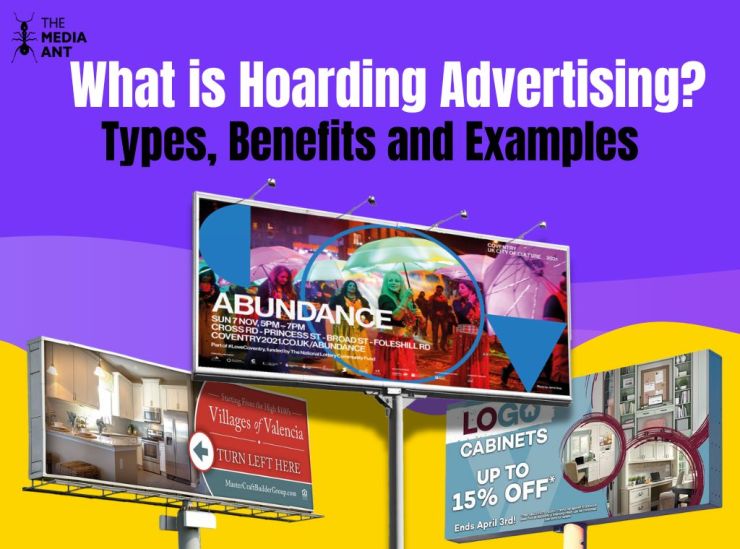
Ever feel judged by a giant milk carton on your way to work? You’re not alone. Today, we delve into the wacky world of hoarding advertising, where companies pay big bucks to plaster their logos on everything from buildings to blimps. Get ready for some outlandish examples, types and advantages of this marketing method. Buckle up, and let’s see if hoarding advertising can hold your attention.
What is Hoarding Advertising?
Hoarding advertising refers to large outdoor advertisements displayed on billboards or similar structures, prominently positioned along roads, highways, or urban areas. These ads, also known as “billboard ads,” are designed to capture the attention of passersby and drivers with their size, bright colors, and bold messages. Typically used for brand promotion, product launches, or public announcements, hoarding ads aim to create high visibility and reach a broad audience quickly.
Strategically placed in high-traffic areas, they are an essential component of out-of-home (OOH) advertising, leveraging the advantage of repeated exposure as people commute daily. The effectiveness of hoarding advertising lies in its ability to deliver a concise and impactful message to a diverse demographic, making it a powerful tool for enhancing brand recognition and recall. Despite the rise of digital marketing, hoarding ads remain a staple in advertising due to their strong visual impact and extensive reach.

What Is Outdoor Hoarding Advertising Used for?
Outdoor hoarding advertising is used to promote brands, products, services, or public messages through large, strategically placed billboards or structures in high-traffic areas. Its primary purposes include enhancing brand visibility, driving consumer awareness, and influencing purchasing decisions. This type of advertising is effective for reaching a wide and diverse audience, making it ideal for product launches, special promotions, and community announcements. By leveraging high footfall and vehicular traffic locations, outdoor hoarding ads ensure repeated exposure, which aids in building brand recognition and recall among commuters and pedestrians.
In marketing terms, hoardings are designed to:
- Capture attention within a few seconds
- Deliver a simple, memorable message
- Build brand awareness through repeated exposure
The hoarding meaning in advertising goes beyond just size—it represents scale, permanence, and dominance in the visual landscape.
What are hoardings in advertising?
Hoardings are typically:
- Static printed billboards
- Digitally illuminated displays
- Wall-mounted or building-wrapped creatives
They differ from smaller outdoor formats by offering larger canvas space, longer display duration, and stronger brand presence.
Types Of Hoarding Advertising
Hoarding advertising encompasses various types, each suited to different marketing objectives and locations. Key types include:
1. Traditional Billboards
Traditional billboards are large, static advertising displays mounted on roadside structures, commonly seen along highways and busy urban areas. They typically feature bold, visually striking designs to capture the attention of drivers and pedestrians. Used for brand promotion, product launches, and public announcements, traditional billboards are highly effective due to their prominent placement and ability to reach a wide audience. Their fixed nature ensures continuous visibility, making them a staple in out-of-home (OOH) advertising strategies.
2. Digital Billboards
Digital billboards are electronic displays that show dynamic content, such as videos, animations, and rotating ads. Positioned in high-traffic areas like highways and urban centers, they capture attention with vibrant visuals and changing messages. These billboards offer flexibility, allowing advertisers to update content quickly and run multiple ads on a single screen. Digital billboards are effective for real-time advertising, engaging a wide audience, and enhancing brand visibility through eye-catching, interactive presentations.
3. Mobile Billboards
Mobile billboards are advertisements displayed on vehicles, such as trucks, buses, or vans, which travel through various locations. This mobility allows them to reach diverse and widespread audiences, particularly in urban areas. They are effective for targeting specific regions and events, ensuring high visibility and frequent exposure. Mobile billboards are versatile and can be strategically routed to maximize impact, making them ideal for promotional campaigns, product launches, and brand awareness initiatives in dynamic, high-traffic environments.
4. Wallscapes
Wallscapes are large-scale advertisements displayed on the sides of buildings, typically in busy urban areas. These massive ads dominate the visual landscape, capturing the attention of both pedestrians and drivers. Wallscapes are highly effective for creating a significant visual impact and enhancing brand visibility. Their prominent placement and size make them ideal for promoting major brands, events, or products, ensuring long-lasting impressions. They are especially useful in densely populated areas where they can reach a broad and diverse audience.
5. Construction Hoardings
Construction hoardings are temporary barriers erected around construction sites, often used as advertising spaces. These hoardings transform otherwise unsightly areas into visually appealing displays, promoting brands, products, or public messages. Positioned in high-traffic urban locations, they effectively capture the attention of passersby. Construction hoardings not only enhance the aesthetic of the site but also offer continuous exposure, making them a valuable tool for brand visibility and community engagement during the construction period.
6. Backlit and Frontlit Hoardings
Backlit and frontlit hoardings are types of illuminated outdoor advertisements designed for high visibility, especially at night. Backlit hoardings use internal lighting to shine through the ad, creating a vibrant and evenly lit display. Frontlit hoardings are illuminated from the front using external lights, highlighting the ad’s surface. Both types ensure continuous exposure in low-light conditions, enhancing the ad’s effectiveness. These hoardings are commonly placed in high-traffic areas, ensuring that the advertisement remains eye-catching and impactful around the clock.
How Hoarding Advertising Works in Modern Marketing
Despite being a traditional medium, hoarding advertising has evolved significantly. Modern campaigns are planned using data-backed insights rather than guesswork.
Key elements that make hoarding advertising effective today include:
Strategic Location Planning
Visibility is driven by:
- Traffic density
- Vehicle speed and dwell time
- Pedestrian footfall
- Sightlines and obstruction-free views
A well-placed hoarding can reach thousands or even lakhs of impressions daily.
Message Simplicity
Because audiences view hoardings briefly, messages must be:
- Short
- Bold
- Visually striking
Most effective hoarding creatives communicate one core idea, not multiple offers.
Integration with Digital Campaigns
Modern hoarding marketing often supports digital efforts by:
- Reinforcing brand recall
- Driving branded searches
- Using QR codes, URLs, or app prompts
This offline-to-online synergy makes outdoor hoardings highly relevant in omnichannel strategies.
Hoarding Advertising Advantages
1. Visibility
Hoarding advertising offers unparalleled visibility, ensuring your message reaches a wide audience, day or night. Placed strategically in high-traffic areas, it grabs attention effortlessly.
2. Brand Awareness
With its large format and eye-catching designs, hoarding advertising boosts brand awareness. It leaves a lasting impression on viewers, imprinting your brand into their memory.
3. Targeted Exposure
Hoardings can be strategically placed to target specific demographics, ensuring your message reaches the right audience, maximizing impact and ROI.
4. 24/7 Presence
Unlike other forms of advertising, hoardings provide constant exposure, reinforcing your message consistently over time, even when other mediums are inactive.
5. Creative Freedom
Hoarding advertising allows for immense creativity in design and messaging, enabling brands to craft compelling narratives and visually stunning campaigns that captivate audiences.
Hoarding Advertising Cost
The hoarding advertising cost can vary widely depending on factors such as location, size, duration, and demand. Prime locations in bustling urban areas command higher rates compared to less prominent areas. Similarly, larger hoardings with better visibility typically cost more. Duration of the campaign also influences pricing, with longer-term commitments often offering discounts.
Overall, expect Hoarding Advertising Rates to range from a few hundred to several thousand dollars per month, with some high-profile locations commanding even higher rates. It’s advisable to consult with advertising agencies or media companies for specific pricing based on your campaign requirements.
Hoarding Advertising Agency
The Media Ant is a prominent hoarding advertising agency known for its comprehensive services and extensive network across India. They specialize in facilitating hoarding advertising campaigns, offering a wide range of options tailored to clients’ needs and budgets. With their expertise, they assist businesses in selecting strategic locations, negotiating competitive rates, and ensuring maximum visibility and impact for their campaigns.
The Media Ant‘s dedication to client satisfaction and their innovative approach to outdoor advertising make them a trusted partner for brands looking to leverage the power of hoarding advertising.
Hoarding Advertising Examples
1. Manyavar
Manyavar is a popular Indian clothing brand for men. Their hoardings often feature celebrities or models dressed in traditional Indian attire. The focus is usually on family, heritage, and tradition.
2. Tanishq Jewellery
Tanishq, a popular jewelry brand in India, uses hoardings to showcase their latest collections and designs. Their hoardings often feature celebrities or models wearing Tanishq jewelry, and the focus is usually on elegance and beauty.
3. Asian Paints
Asian Paints is a major player in the Indian paint industry, and their hoardings are known for their creative and colourful designs. They often use puns or wordplay to grab attention, and their hoardings can be quite humorous at times.
Factors to Consider Before Choosing Hoarding Advertising
Before investing, marketers should evaluate:
- Location relevance to target audience
- Creative clarity and message length
- Campaign duration
- Budget vs expected reach
- Compliance and permissions
Strategic planning ensures better ROI from hoarding campaigns.
Why Hoarding Advertising Remains a Powerful Marketing Tool
Hoarding advertising continues to be a high-impact, trust-building, and scalable medium for brands looking to dominate physical spaces. With evolving formats, better planning tools, and integration with digital strategies, hoardings are far from outdated.
For marketers and executives, hoarding advertising remains a strategic investment—especially when visibility, credibility, and mass reach are non-negotiable.
FAQs on Hoarding Advertising
1. What is the difference between hoarding and billboard?
Hoarding refers to large outdoor advertising structures, often on construction sites, while billboards are standalone structures placed in high-traffic areas like highways. Both serve to display ads, but hoardings are typically temporary and site-specific.
2. What material is advertisement hoarding?
Advertisement hoardings are commonly made from durable materials like plywood, aluminum, or steel, often covered with weather-resistant vinyl or PVC banners. These materials ensure longevity and visibility of the ads in various outdoor conditions.
3. What is poster and hoarding?
A poster is a printed advertisement typically displayed indoors or in smaller outdoor spaces, while a hoarding is a large outdoor advertising structure, often found at construction sites or along roads, designed for high visibility and impact.
4. How do you explain hoarding?
Hoarding is a large outdoor advertising display, often seen on construction site barriers or along roads. It aims to capture public attention with bold visuals and messages, promoting products, services, or events to a wide audience.
5. What does hoarding stand for?
Hoarding stands for a large outdoor advertising panel used to promote products, services, or messages. Typically found on construction site barriers or along roads, hoardings are designed to attract the attention of passersby with impactful visuals and messages.
6. Is hoarding advertising effective for brand awareness?
Yes, hoarding advertising is highly effective for brand awareness because it offers large-format visibility in high-traffic locations. Continuous exposure helps reinforce brand recall among commuters, pedestrians, and local audiences, making it ideal for both new brand launches and sustained branding campaigns.
7. What are the common locations used for hoarding advertising?
Common locations for hoarding advertising include highways, busy road junctions, commercial areas, near malls, metro stations, airports, and construction sites. These locations are selected based on traffic flow, audience relevance, and maximum visibility.
8. How long should a hoarding advertising campaign run?
A hoarding advertising campaign typically runs for one to three months to achieve effective brand recall. Short-term campaigns work well for promotions or launches, while longer durations are preferred for brand-building and sustained visibility.
9. What industries benefit most from hoarding advertising?
Industries such as real estate, FMCG, automotive, education, retail, entertainment, and government sectors benefit the most from hoarding advertising. These industries rely on mass visibility and repeated exposure to influence purchasing or decision-making behaviour.
10. Can hoarding advertising be combined with digital marketing?
Yes, hoarding advertising can be effectively combined with digital marketing. Brands often integrate QR codes, website URLs, social media handles, or app prompts on hoardings to drive online engagement, creating a seamless offline-to-online marketing journey.


